Cart
Your shopping cart is empty!
It's never too late to make things right :)

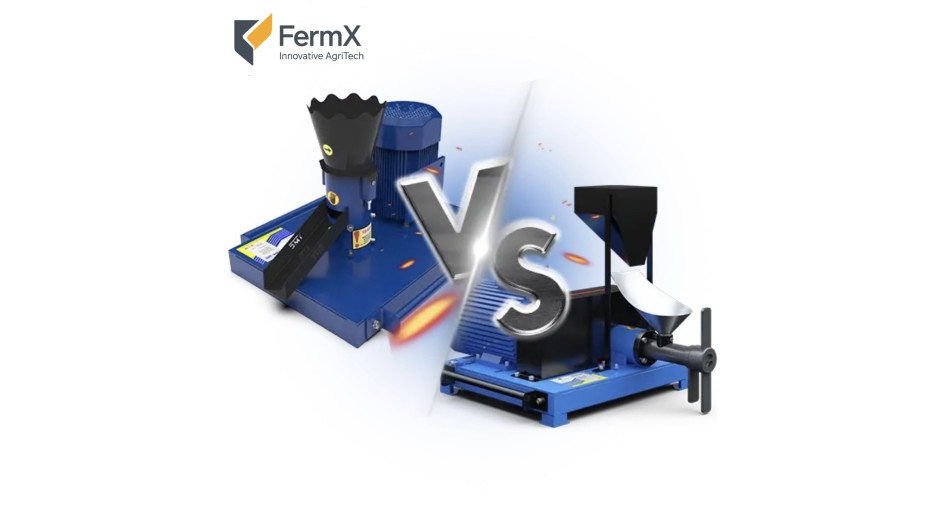
A feed extruder processes raw materials under pressure and mechanical friction at elevated temperatures. The material is compressed and thermally treated inside the extrusion chamber. As it passes through the die opening, it may expand and develop a porous structure. Depending on the ingredients and machine configuration, the output can take the form of small sticks or flakes.
Heat treatment can improve starch digestibility and reduce certain microorganisms. The actual effect depends on processing temperature, pressure, residence time and raw material composition.
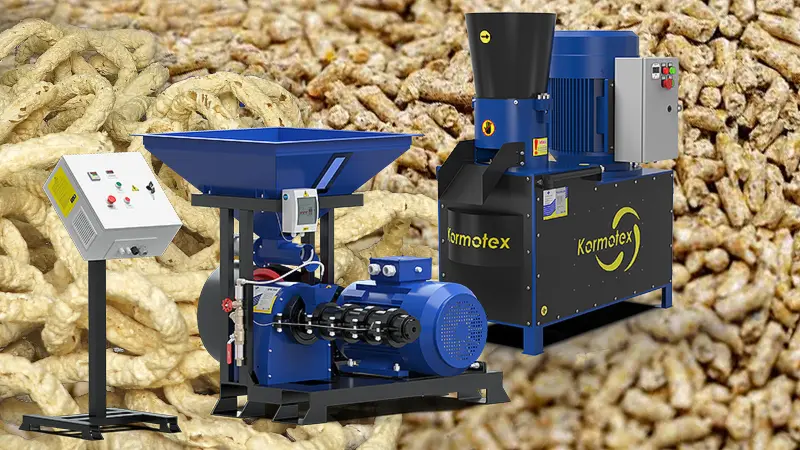
A feed pellet mill uses rollers to press prepared feed mixtures through the openings of a die. This produces compact, cylindrical feed pellets. Friction during pressing also generates heat, although the thermal treatment is generally less intensive than in extrusion.
Grain, bran and other suitable ingredients can be mixed before pelleting. Approved premixes and additives may also be incorporated according to the feed formulation. Ingredient selection and dosage should reflect the nutritional requirements of the target animal species.
| Feature |
| Feed Extruder | ||
| Processing method | Compression through a die | Pressure and heat treatment | ||
| Final product |
|
| ||
| Temperature |
|
| ||
| Nutrients | Depends on the formulation; some heat-sensitive ingredients may be preserved | Starch is often more digestible; heat-sensitive nutrients may be affected | ||
| Hygiene |
|
| ||
| Storage |
| Store dry, sealed and protected from moisture | ||
| Transport | Dense pellets are generally easy to stack | Porous products may break more easily | ||
| Applications |
|
|

A feed pellet mill is a practical option for farms that want to produce compact pellets from their own feed mixtures or simplify feed handling and transport. Depending on the model, small machines may also operate from a 220 V power supply.
A feed extruder is suitable when intensive thermomechanical processing is required, for example to modify starch properties or produce expanded feed. Output capacity depends on motor power, raw material, moisture content and die configuration.
Pellet mills and extruders serve different purposes. The right choice depends on the animal species, feed formulation, desired product structure, production volume and budget. Before purchasing, check the specifications of the particular machine and the requirements of your feed production process.
Leave your contact details and we will get back to you within 15 minutes.

