Cart
Your shopping cart is empty!
It's never too late to make things right :)

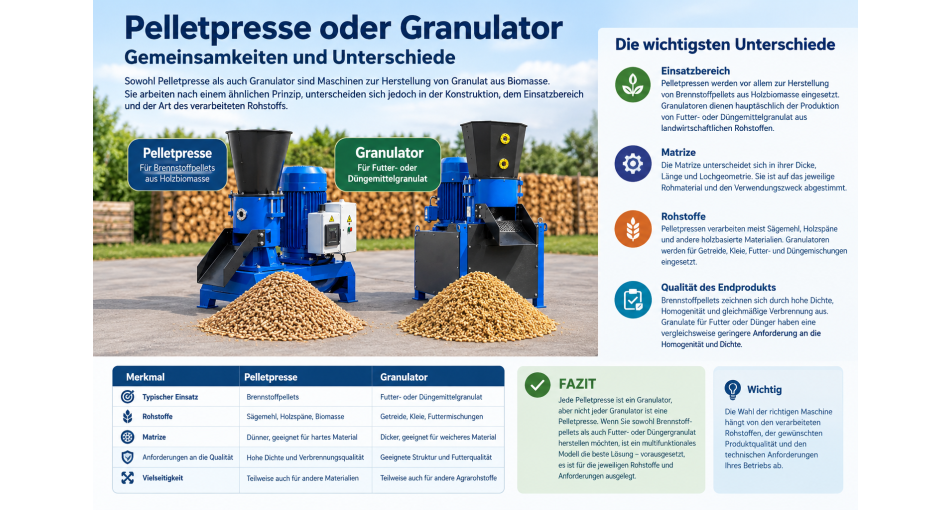
Both machines compress raw materials into uniform pellets. The main distinction is whether the equipment is designed to produce fuel from wood biomass or agricultural granules for animal feed and fertiliser.
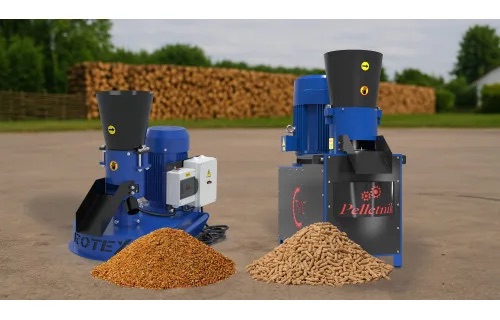
A pellet press or granulator generally consists of a drive motor, a pressing system with rollers and a die. The motor powers the mechanism, while the rollers force prepared material through the die openings, forming compact pellets of a specified diameter.
Important: Raw materials must be suitably reduced in size and prepared to the required moisture level before pressing. Particle size must match the die openings and the machine's operating requirements. Coarse wood may require additional shredding equipment.
Pellet presses are commonly used to produce fuel pellets from sawdust, wood shavings and other suitable biomass materials. Granulators are mainly associated with agriculture, where they process suitable raw materials into animal feed or organic fertiliser granules.
Some machines can perform both functions, depending on their construction, the material being processed and the die installed.
The die determines the pellet diameter and influences the final shape. Its thickness, channel length and hole geometry must be matched to the material. There is no universal rule that softer raw materials always require a thicker die. Material structure, compressibility, moisture content and required pressing pressure all affect the choice.
| Feature |
|
| ||
| Typical use |
|
| ||
| Raw materials |
|
| ||
| Die |
|
| ||
| Main requirements | Durability and consistent combustion |
| ||
| Versatility |
| May process other agricultural materials, depending on the model |
Yes. Certain pellet presses can also produce feed or fertiliser granules when fitted with a suitable interchangeable die. Before changing the application, check the manufacturer's specifications for compatible raw materials, the die, motor and operating conditions. Not every machine is designed for both purposes.
When choosing equipment, consider:
The type and properties of the raw material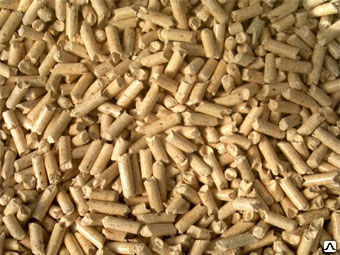
Required pellet diameter and product quality
Machine capacity and operating duration
Whether the die and other components can be changed
Raw material preparation and moisture requirements
Pellet presses and granulators share a similar operating principle, but they are not automatically interchangeable. A pellet press is designed for fuel production, while a feed granulator may be intended for agricultural materials. Multifunctional models offer greater flexibility when their technical specifications support the intended application.
Leave your contact details and we will get back to you within 15 minutes.

