Cart
Your shopping cart is empty!
It's never too late to make things right :)

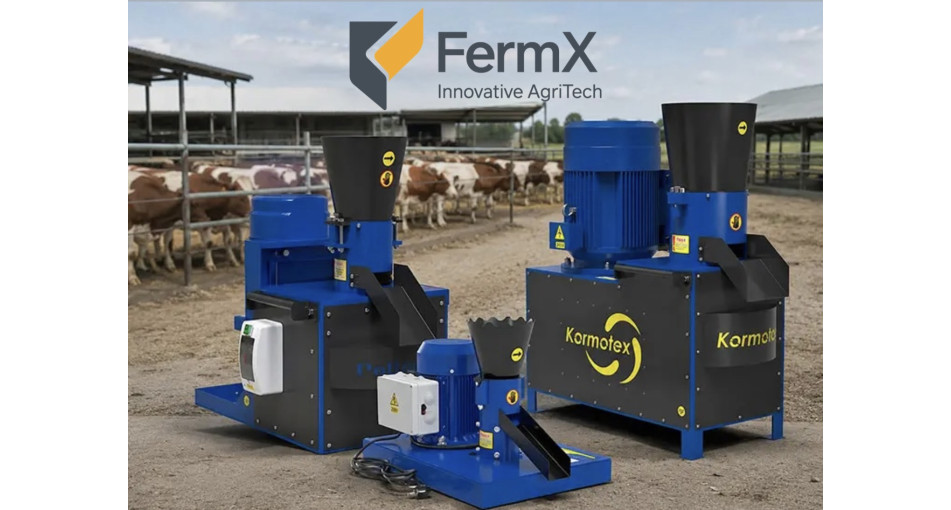
But which pellet machine is right for your operation? The most important factors are production capacity, motor power, power supply and the appropriate die.
Producing feed pellets offers several advantages:
Reduced feed waste: Pellets are less likely to be scattered during feeding.
Uniform composition: When the ingredients are mixed correctly, the feed components are distributed evenly.
Easy storage: Pelletized feed is convenient to transport, store and measure.
Custom feed formulas: Grains, proteins and minerals can be combined according to the animals' nutritional needs.
Cost savings: Using your own raw materials can help reduce feed costs.
A feed pellet machine is therefore an attractive investment for both small-scale animal owners and agricultural businesses.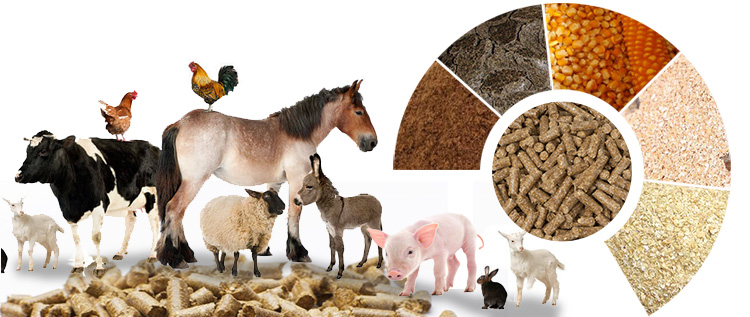
Flat-die pellet machines are particularly popular among small and medium-sized farms. They feature a compact design, straightforward maintenance and replaceable dies.
The quality of the die and press rollers affects the machine's production capacity and service life.
The required capacity depends on the number of animals and their daily feed consumption.
| Production capacity | Suitable application |
|---|---|
| Up to 40 kg/h | Small-scale private animal keeping |
| 100–200 kg/h | Small agricultural farms |
| 300 kg/h and above | Larger farms and commercial production |
| Production capacity | Suitable application |
| Up to 40 kg/h | Small-scale private animal keeping |
| 100–200 kg/h | Small agricultural farms |
| 300 kg/h and above | Larger farms and commercial production |
Note: Actual production capacity may vary depending on the raw materials, moisture content and die diameter.
For smaller households, feed pellet machines with a motor power of approximately 1.5–3 kW are often suitable. Depending on production requirements, agricultural businesses may need more powerful machines rated at 5.5–11 kW or higher.
There are two common types of electrical connections:
230 V: Single-phase power supply, suitable for smaller pellet machines and private operations.
400 V: Three-phase power supply for more powerful machines and larger production volumes.
Before purchasing a machine, check whether your existing electrical installation is suitable for its requirements.
Different animal species require different pellet sizes.
| Animal type | Pellet diameter |
|---|---|
| Chicks and quails | 2–3 mm |
| Laying hens | 3–4 mm |
| Pigs | 4–5 mm |
| Cattle | 6–8 mm |
These figures are intended as a general guide. Younger animals may require smaller pellets. Interchangeable dies allow you to produce pellets in different sizes.
Look for a machine that is easy to clean and has replaceable dies, adjustable press rollers and readily available spare parts. Regular maintenance extends the machine's service life and helps ensure reliable operation.
The GKM-100 (230 V) is suitable for small-scale animal keeping and the production of limited quantities of feed.
Key advantages:
Compact dimensions
Single-phase 230 V connection
Production capacity of up to 40 kg/h
Space-saving design and easy operation
For operations with higher daily feed requirements, the OGP-150 (230 V) and OGP-200 are worth considering.
These models are designed for larger production volumes and are suitable for farms that want to produce their own compound feed regularly.
When choosing a model, consider the motor power, actual production capacity and available power supply.
The GRAND series feed pellet machines are suitable for larger agricultural businesses and commercial feed production.
Depending on the model, these machines can process several hundred kilograms of feed per hour.
For efficient production, it is also important to consider raw material preparation, mixing and cooling of the finished pellets.
Suppose a farm needs 200 kg of compound feed per day and has two hours available for production. The calculation is as follows:
200 kg ÷ 2 hours = 100 kg/h
Under the intended operating conditions, the pellet machine should achieve an actual production capacity of at least 100 kg/h. It is also advisable to allow additional time for preparation and cleaning.

When choosing a feed pellet machine, the key factors are production capacity, motor power, power supply and die quality.
The GKM-100 with a 230 V connection is a practical solution for small-scale animal keeping. The OGP-150 and OGP-200 are suitable for farms with higher feed requirements, while the GRAND series is designed for larger production volumes.
With the right feed pellet machine, you can create customized feed formulas, use raw materials efficiently and optimize production costs in the long term.
We will be happy to advise you and help you choose the right machine for your operation.
Leave your contact details and we will get back to you within 15 minutes.

