Cart
Your shopping cart is empty!
It's never too late to make things right :)

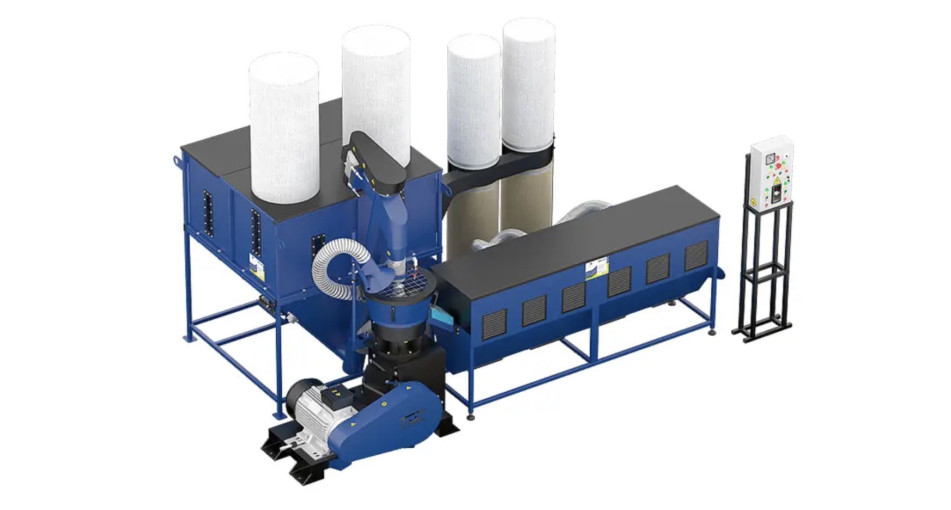
The pellet market continues to develop. According to Bioenergy Europe, global wood pellet production reached approximately 53.5 million tonnes in 2025, around 10% higher than in 2024. Global consumption amounted to approximately 51.5 million tonnes. Europe remains one of the largest pellet markets, particularly due to the use of pellets for heating residential and commercial buildings.
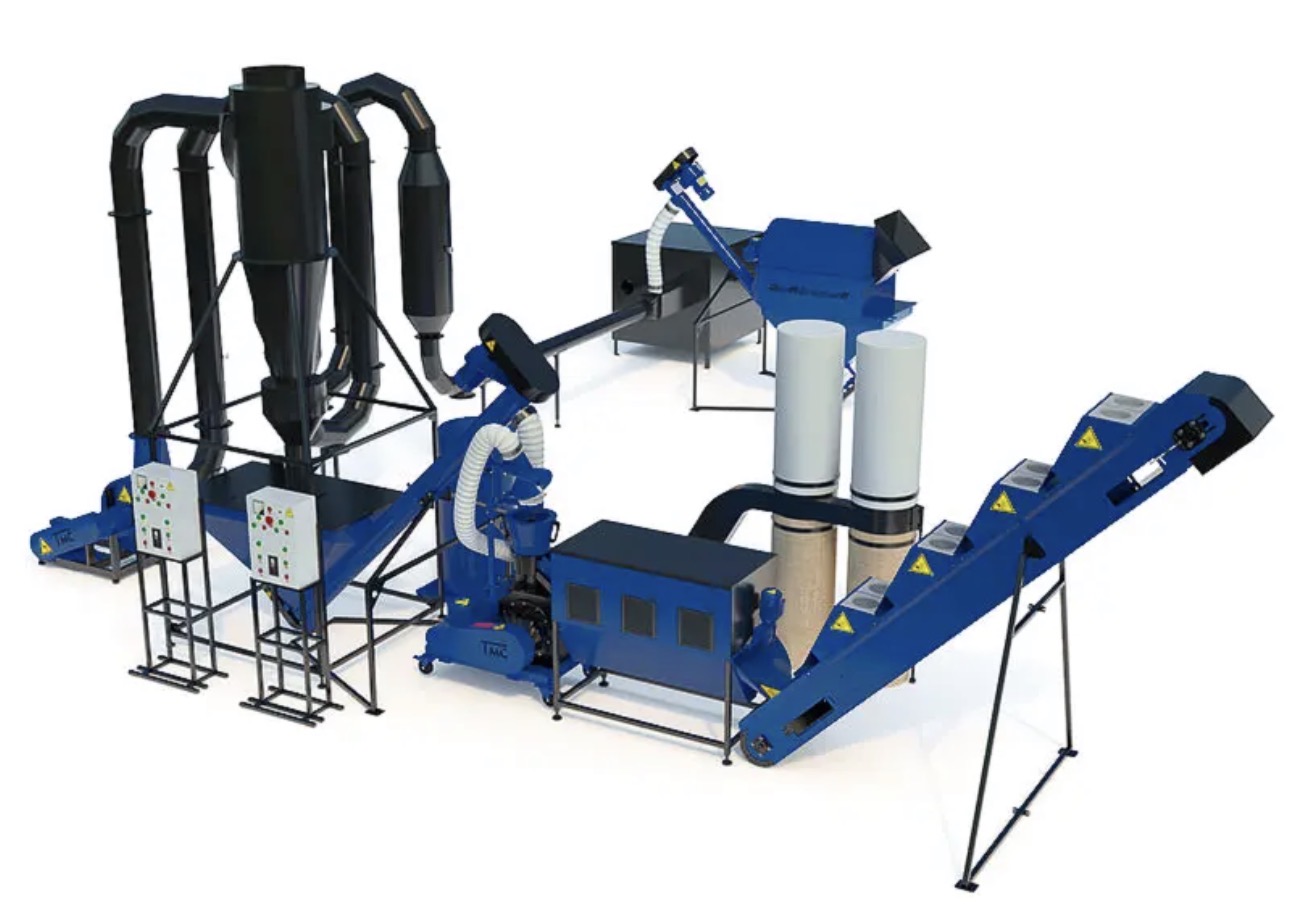
The configuration of a production line depends on the type, particle size, and initial moisture content of the raw material. For example, dry sawdust requires significantly less preparation than wet wood chips.
The main production steps are:
Pre-shredding of coarse wood residues.
Drying the raw material to the required residual moisture content.
Fine grinding to achieve a uniform particle size.
Mixing and conditioning before pelletization.
Pressing the raw material through the die of the pellet mill.
Cooling the produced pellets.
Screening to remove dust and fines.
Intermediate storage and packaging of the finished product.
For many wood raw materials, the target moisture content before pelletization is approximately 8–12%. The recommended particle size is often around 2–4 mm. The exact parameters depend on the material and the type of pellet mill used.
During the pressing process, the material is forced through the holes in the die and formed into compact pellets. Diameters of 6 and 8 mm are widely used for fuel pellets. After pressing, the pellets have an elevated temperature and are therefore cooled before screening and packaging.
An industrial pellet production line consists of several machines that are coordinated with one another. The specific equipment configuration depends on the properties of the raw material.
| Equipment | Function | |
| Shredder | Pre-shredding of raw materials | |
| Hammer mill | Producing the required particle size | |
| Dryer | Reducing moisture content | |
| Conveyors and screw conveyors | Material transportation between machines | |
| Pellet mill | Pellet production | |
| Cooler | Cooling the pellets | |
| Screen |
| |
| Packaging machine | Packaging the finished product |
The line can additionally be equipped with a heat generator, cyclones, exhaust fans, aspiration systems, storage hoppers, dosing equipment, and an automated control system.

A common mistake when selecting equipment is to focus exclusively on the capacity of the pellet mill. A pellet mill with a stated capacity of 500 kg/h does not automatically mean that the entire production line will achieve the same throughput. The dryer, shredder, hammer mill, conveying system, or the characteristics of the raw material may limit the overall production capacity.
For dry sawdust with a suitable particle size, a compact line without a drying system or pre-shredder may be sufficient. Wet wood chips, on the other hand, require additional shredding and drying stages. In the case of straw, husks, and other agricultural biomass, the configuration must also be adapted to the properties of the specific material.
New equipment can be specifically configured for a particular raw material and the required production capacity. Used machinery can reduce the initial investment, but it requires a thorough inspection of dies, rollers, bearings, gearboxes, motors, and automation systems.
Before selecting a production line, the type of raw material, moisture content, initial particle size, desired production capacity, pellet diameter, and packaging method should be determined. Based on these parameters, the technological process and the required capacity of the individual machines can be defined.
Leave your contact details and we will get back to you within 15 minutes.

