Cart
Your shopping cart is empty!
It's never too late to make things right :)

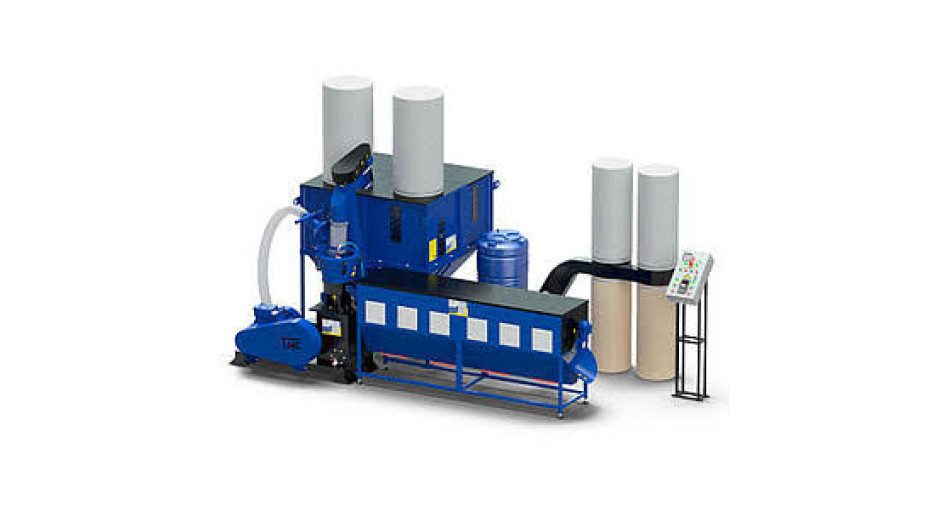
To ensure that fine wood particles can be successfully compressed into high-quality pellets, several key conditions must be met.
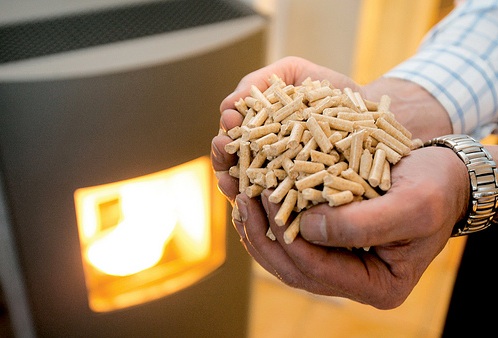
The sawdust should be properly ground to a uniform particle size. The optimal particle size for pellet production is up to 3 mm.
For high-quality pelletizing, the raw material should have a moisture content of 12–14%.
Sawdust with a moisture content above 15% is not suitable for producing high-quality pellets. Drying equipment is used to remove excess moisture.
Pressing takes place under high temperature and pressure. This is necessary to release the natural binding component of wood — lignin, which is contained in the wood structure.
Lignin provides the finished pellets with strength without the need to add chemical binding agents.
After leaving the press chamber, the pellets have a high temperature and therefore require forced cooling.
High-quality fuel pellets have a smooth, glossy surface, a minimal number of cracks, high mechanical strength, and good resistance to transportation.
⸻
Pelletizing sawdust offers several advantages:
• Sawdust and wood shavings already have a fine structure, so in many cases there is no need for additional equipment to crush large pieces of wood.
• Material generated during the production of furniture, glued laminated timber, and other wood products often already has an optimal moisture content of 12–14%, so additional drying may not be required.
• Such raw material usually contains fewer foreign impurities such as sand, soil, and bark, which ensures low ash content and high quality of the finished pellets.
⸻
Let us consider an example of a sawdust pellet production line with a capacity of 500 kg/h.
The first stage of production is the grinding of wood raw material.
A rotary or hammer-type crusher is used for this purpose.
The rotary crusher is equipped with a material intake and feeding system. Grinding is carried out using beater knives installed on the rotor.
A screen with openings of the required size is installed in the working chamber. Particles that meet the specified fraction pass through the screen and are transported to the next stage of the production process.
⸻
A large amount of wood dust is generated during grinding.
A cyclone is used for air cleaning. It:
• separates wood dust from the air flow;
• prevents dust accumulation in the production area;
• ensures stable operation of the equipment.
The cyclone is installed above the hopper on a metal frame.
⸻
After air cleaning and dust separation, the raw material enters the agitating hopper.
It is a cylindrical container with a mixing mechanism in the lower section.
Main functions:
• prevention of sawdust caking;
• uniform material feeding;
• stable loading of the pellet mill.
⸻
The pellet mill is the main piece of equipment in the pellet production line.
The raw material is fed through a screw feeder into a mixer, where the surface of the material is slightly moistened.
The sawdust then enters the working chamber, where it is compressed by pressing rollers between the rollers and the surface of the rotating ring die.
Under high pressure, the material passes through the die openings and is formed into pellets.
After leaving the die, the pellets are cut to the required length by a stationary knife.
The pellet mill provides:
• stable pressing;
• high pellet quality;
• automatic operation through a control panel.
⸻
After pelletizing, the finished pellets have a high temperature.
To obtain a high-quality final product, the pellets must be cooled.
The cooling process is carried out as follows:
• the pellets are transported by conveyor to the cooling column;
• inside the column, the pellets are cooled by air flow;
• fine particles are screened out and returned to the pelletizing process;
• the cooled finished pellets are transported to the packaging area.
After cooling, the pellets are transferred to the packaging area.
The finished product can be packed in:
• bags;
• Big Bags;
• other types of packaging depending on the customer’s requirements.
⸻
| Production Stage | Main Equipment | Function | ||
| Raw material grinding |
| Produces a uniform particle size of up to 3 mm | ||
| Air cleaning | Aspiration system and cyclone | Removes wood dust and cleans the air flow | ||
| Storage and material feeding | Agitating hopper | Prevents caking and ensures uniform material feeding | ||
| Pelletizing |
|
| ||
| Cooling |
|
| ||
| Screening of fine particles |
|
| ||
| Transportation | Conveyors | Transfers raw material and finished pellets between production stages | ||
| Packaging | Packaging system |
|

• Sawdust crusher;
• Aspiration system;
• Air-cleaning cyclone;
• Agitating hopper;
• Pellet mill;
• Control panel;
• Cooling column;
• Conveyors;
• Packaging system.
Leave your contact details and we will get back to you within 15 minutes.

